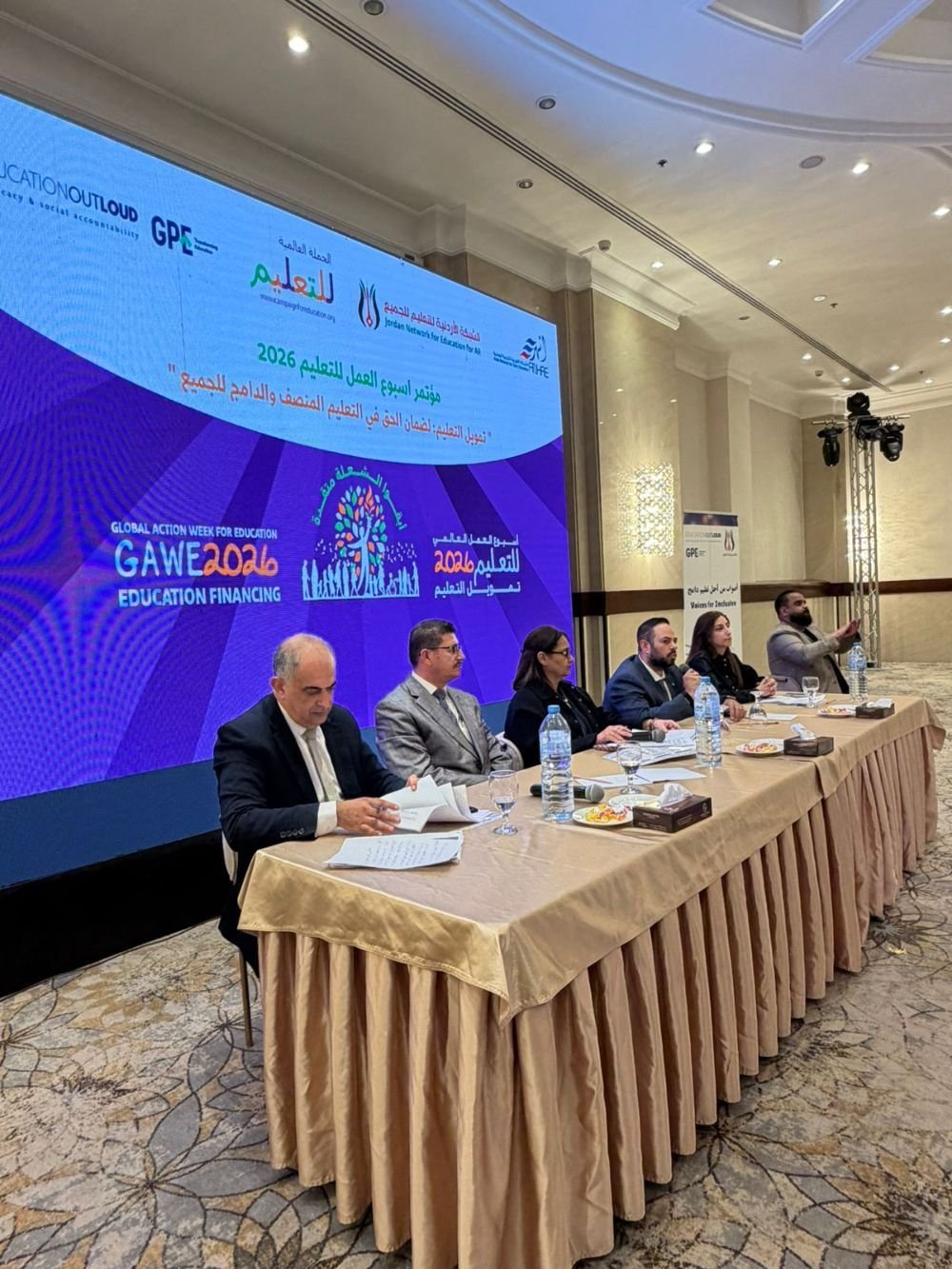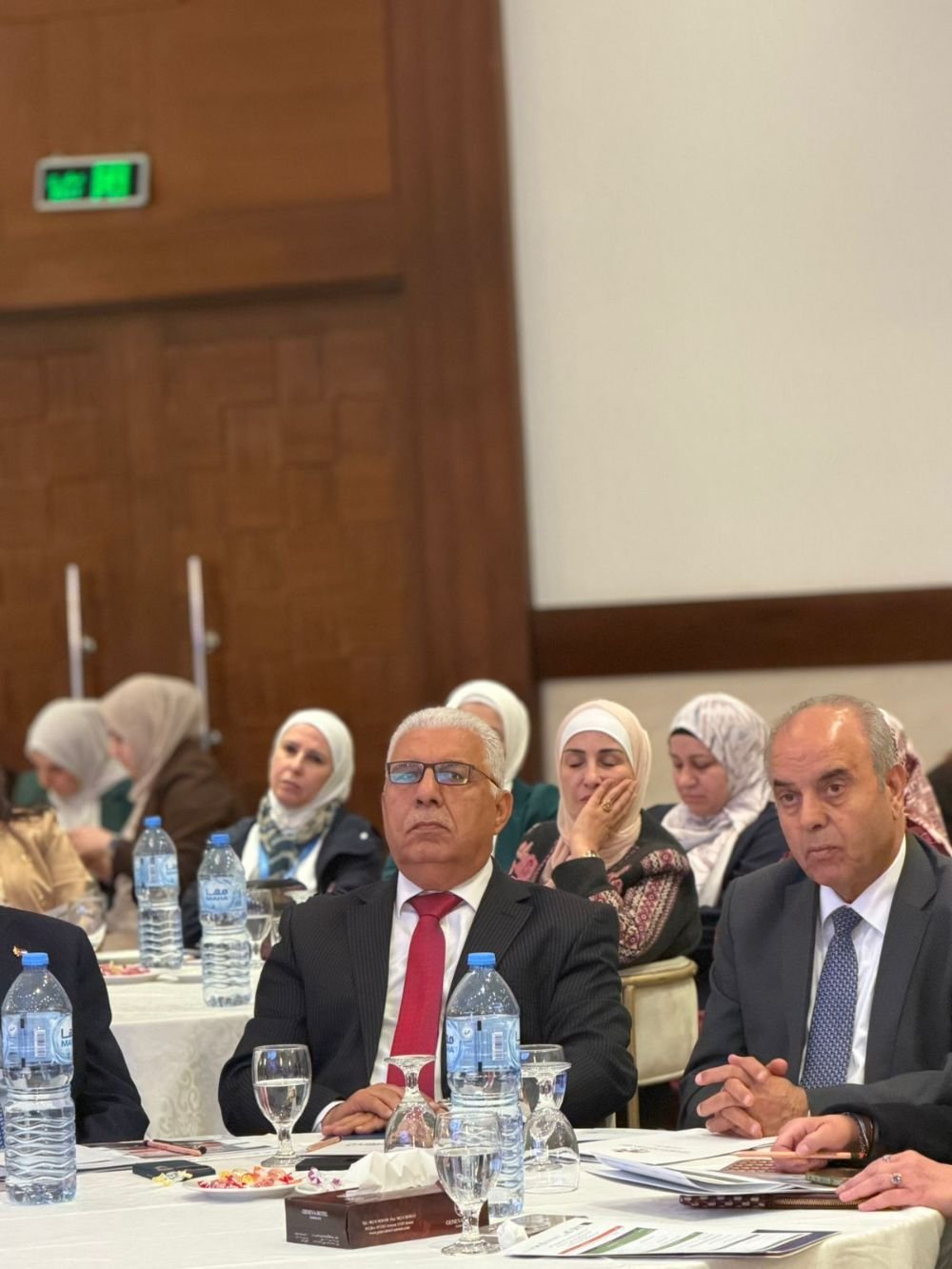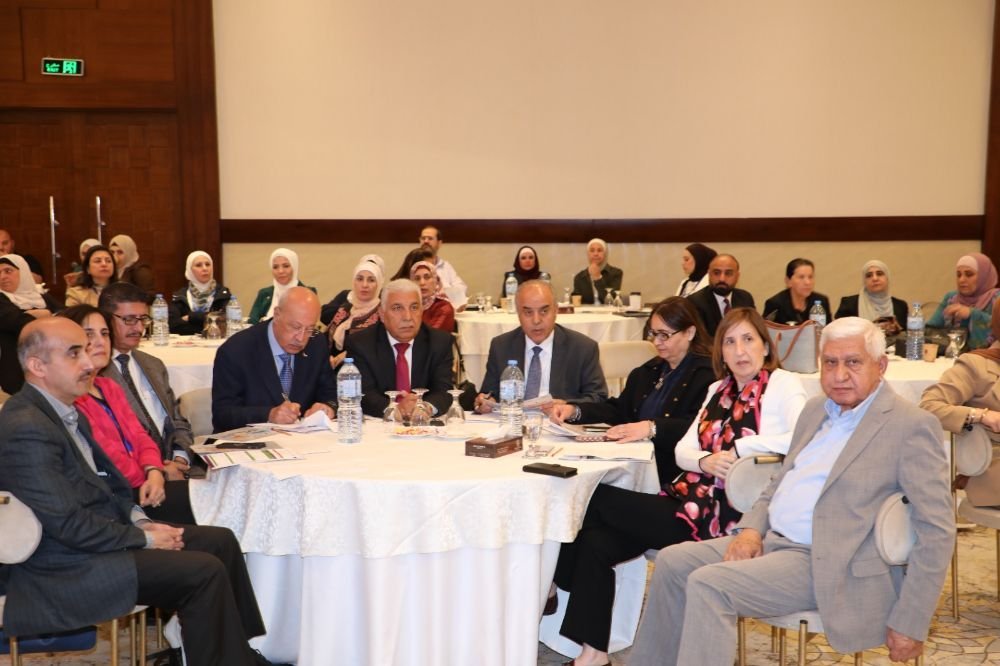
Amman – Under the patronage of His Excellency the Minister of Education, Higher Education, and Scientific Research, Prof. Dr. Azmi Mahafzah, the Arab Network for Civic Education (ANHRE), in partnership with the Jordan Network for Education for All, organized the Global Action Week for Education 2026 conference in Jordan on Monday, April 27, 2026, at the Geneva Hotel, under the theme:
“Financing Education: Ensuring the Right to Inclusive and Equitable Education for All.”
The conference was held as part of the Global Action Week for Education campaign, which is organized annually across countries worldwide to promote the right to education and mobilize efforts to ensure the provision of quality, inclusive, and equitable education for all. This year’s edition focused on education financing as one of the most pressing challenges to achieving Sustainable Development Goal 4.
In her opening remarks, Ms. Fattouh Younes, Executive Director of ANHRE, emphasized the importance of increasing investment in education as a key driver for sustainable development, stressing the need to adopt fair and sustainable financing policies.
Mr. Khalil Radwan, President of the Jordan Network for Education for All, highlighted the importance of ensuring that Jordan’s education budget is responsive to the needs of the most marginalized groups, through increasing and allocating sufficient and clear funding for inclusive education programs and targeted support initiatives, in order to reduce gaps and ensure equitable access to education.
The conference also featured welcoming remarks from the Commissioner General of the National Center for Human Rights, who underscored the critical role of national human rights institutions in promoting and protecting the right to education. This includes monitoring education policies, assessing their alignment with international human rights standards, and advocating for inclusive education practices that uphold the rights of all. Additionally, Ms. Rana Shaaban, Member of the Board of Trustees of the Royal Academy for Inclusive Education for Persons with Disabilities, delivered a speech emphasizing the importance of inclusive education as a fundamental pillar of the national education system and highlighting the Academy’s role in this field.
The conference included a main panel discussion titled “The Reality of Education Financing in Jordan,” bringing together representatives from the Ministry of Education, the Royal Academy for Inclusive Education, the Jordan Network for Education for All, and civil society. The panel addressed several key issues, including analysis of education financing gaps and their impact on the quality, equity, and responsiveness of education services to the needs of the most vulnerable groups. It also discussed the Ministry’s vision for strengthening domestic education financing to achieve education goals by 2030, in line with the Transforming Education Summit commitments and the new 2026–2030 strategic plan. Challenges related to financing inclusive education amid limited resources were also highlighted, along with the role of civil society organizations across governorates in advocating for the right to education.
Ms. Abeer Darwazeh, National Coordinator of the Jordan Network for Education for All, stated:
“Ensuring the right to equitable and inclusive education is not achieved through policies alone, but through sustained advocacy efforts led by civil society at both local and international levels, grounded in evidence, reflective of community voices, and pushing towards fair and sustainable financing that prioritizes the needs of the most marginalized.”
The conference also featured an intervention by Mr. Emad Imam, Regional Coordinator for the Middle East and North Africa at the International Budget Partnership (IBP), who highlighted the pivotal role of youth in promoting transparency and accountability in public spending, particularly in the education sector. He underscored the importance of equipping youth with the skills and tools needed to analyze public budgets, enabling them to produce evidence-based knowledge that supports advocacy efforts and influences public policy
He mentioned “Transforming the budget from technical documents into simplified and understandable formats increases opportunities for effective citizen participation in public financial management. It also helps align spending priorities with their perspectives, which enhances trust in government and improves satisfaction with public services.”
At the conclusion of the conference, the Youth Statement on Education Financing in Jordan was presented, emphasizing the importance of increasing government funding for education in line with growing needs and challenges. The statement also stressed the need to enhance budget transparency through the availability of open and simplified data, enabling citizens—especially youth—to understand and track public spending. It called for institutionalizing youth participation across all stages of the budget cycle, strengthening their role in decision-making, and enhancing social accountability mechanisms to ensure efficient implementation of allocations and tangible impact on the quality and equity of education.
This was followed by the presentation of the final statement of the Jordan Network for Education for All, which included key demands such as ensuring sustainable and equitable financing for the education sector in Jordan by gradually increasing its share in the national budget in line with international benchmarks (20% of total public expenditure and/or 6% of GDP), as outlined in the Incheon Declaration and Education 2030 Framework for Action. The statement also emphasized the need to reorient resources towards reform and quality programs, strengthen financing for inclusive education through clear budget allocations, ensure equitable distribution of resources based on need, and enhance transparency and accountability in education spending to guarantee the realization of the right to education for all without exception.
The Jordan Network for Education for All concluded that this event represents an important step toward strengthening national dialogue on education financing and advancing more sustainable and equitable policies, ensuring the realization of the right to education for all and contributing to building a more resilient education system capable of responding to future challenges.
It is worth noting that, in parallel with the conference, a multi-stakeholder dialogue session for the Central Region was held to identify key challenges in education financing. This session is part of a series of dialogues to be conducted across different regions of the Kingdom, aiming to develop a comprehensive and evidence-based policy paper addressing education financing and its implications for access, equity, inclusion, and quality.