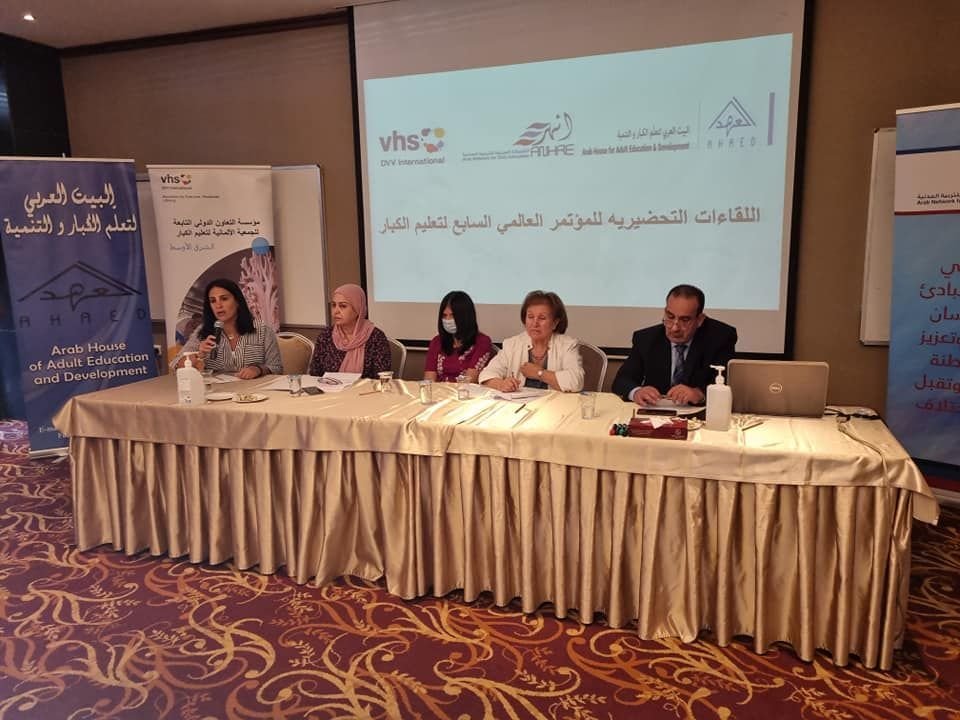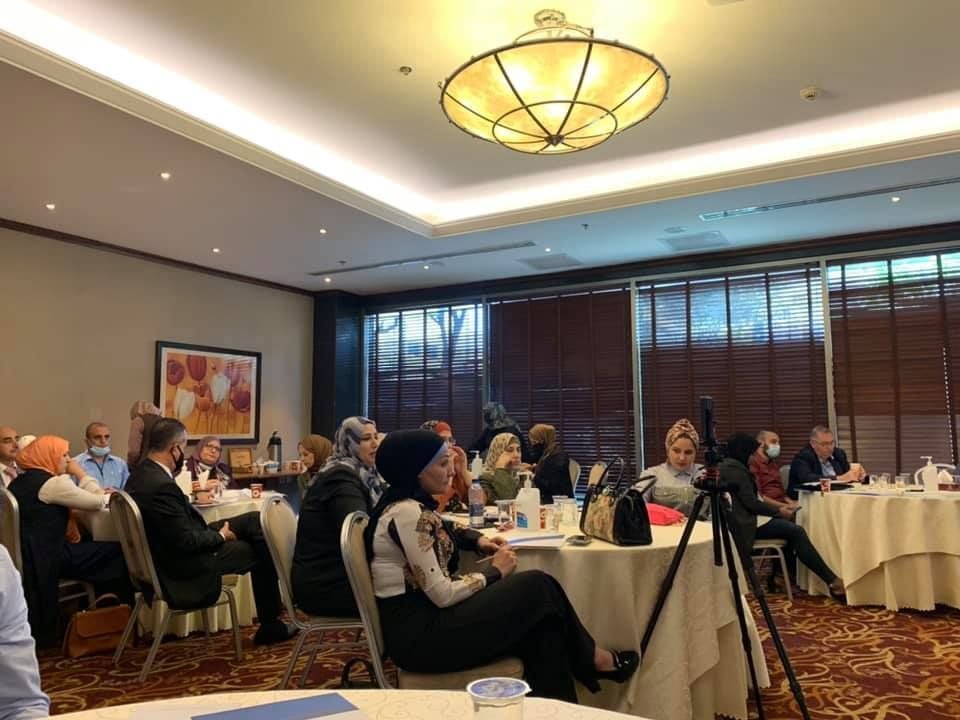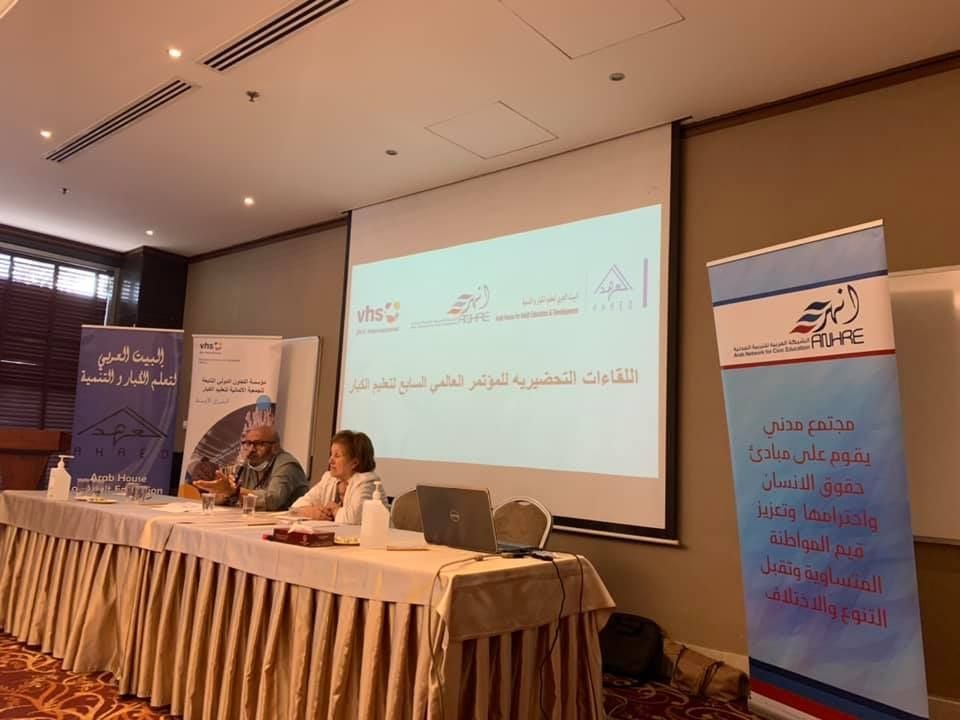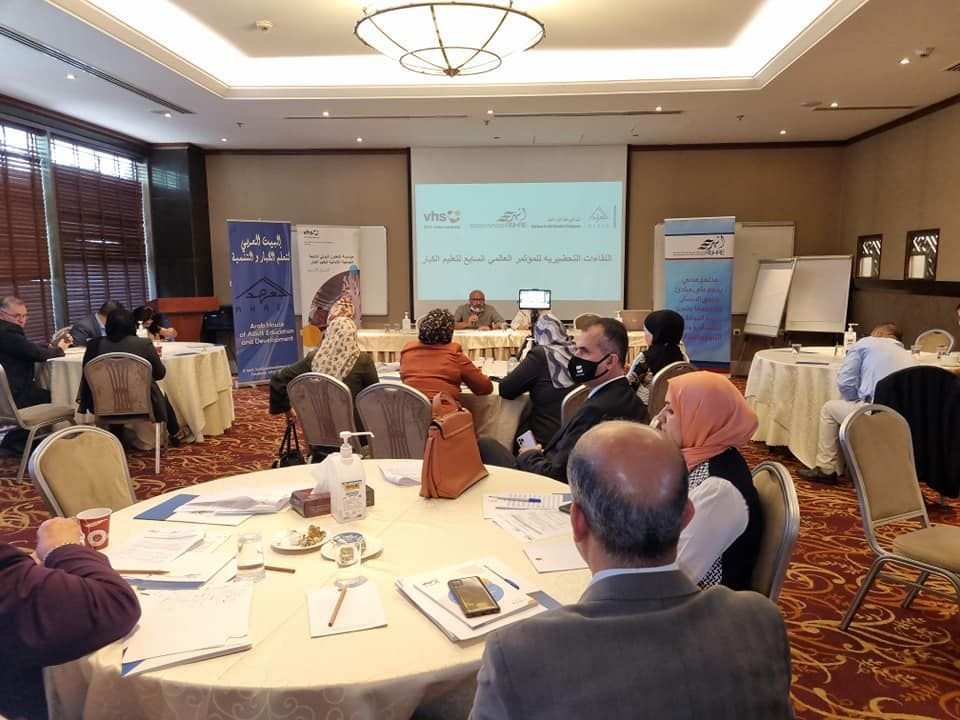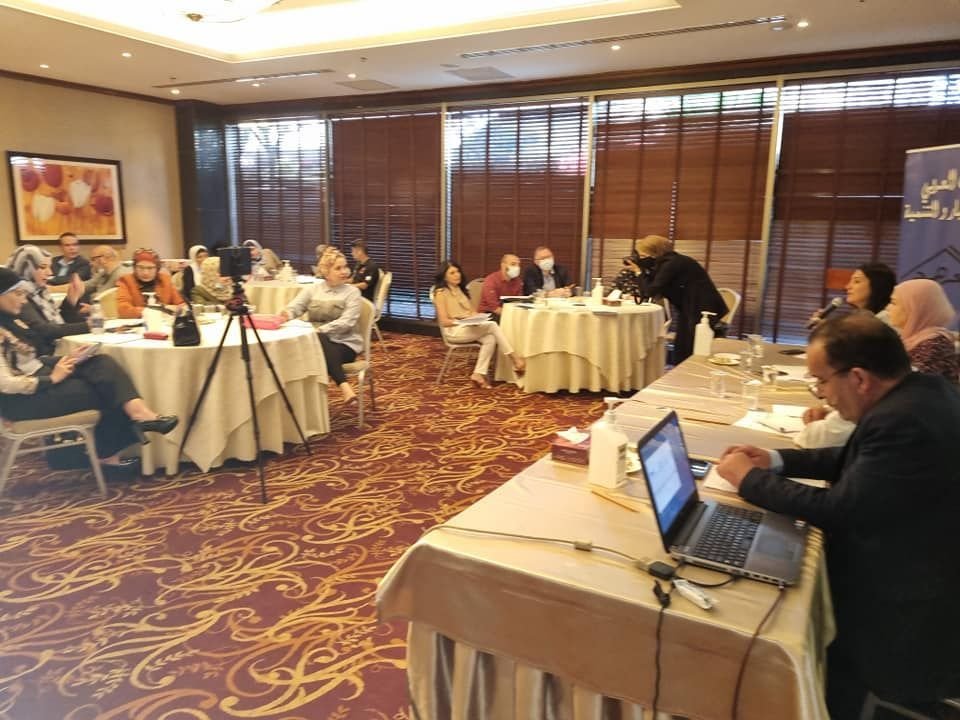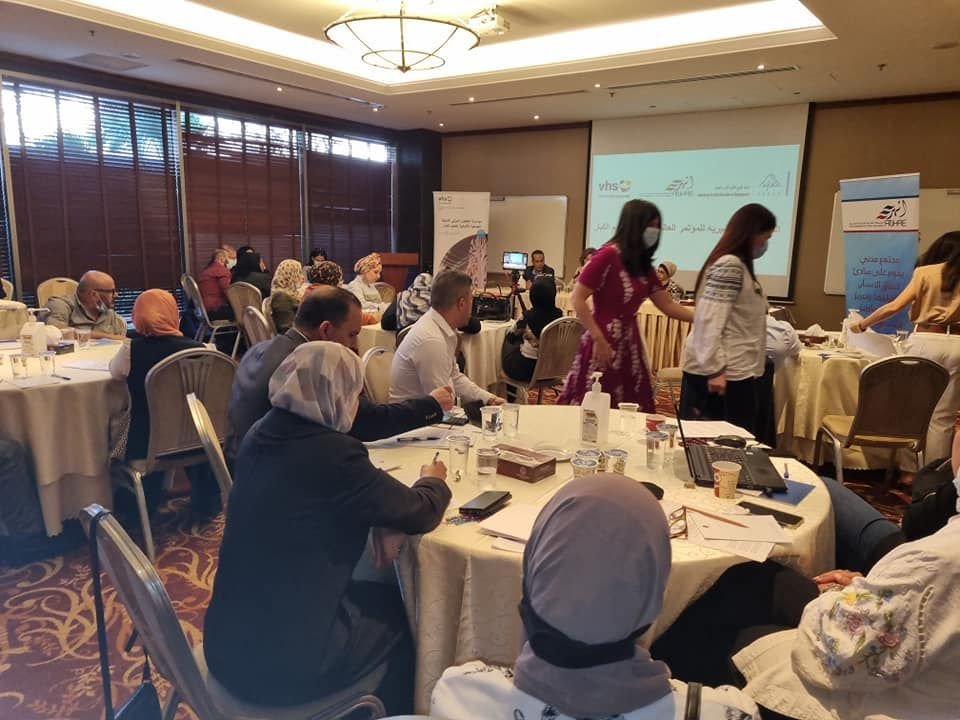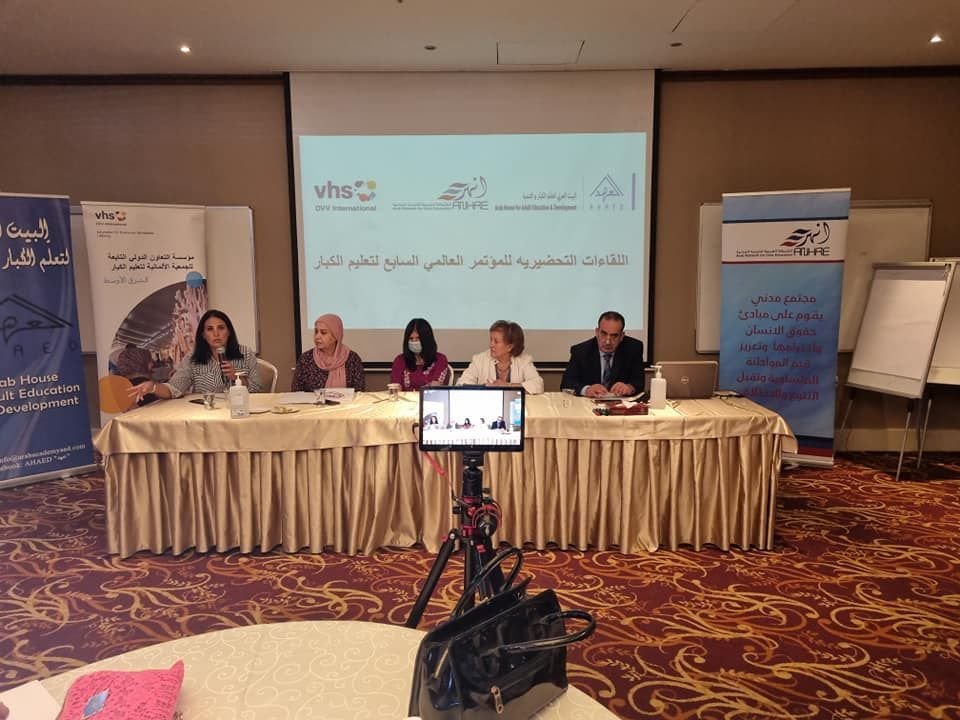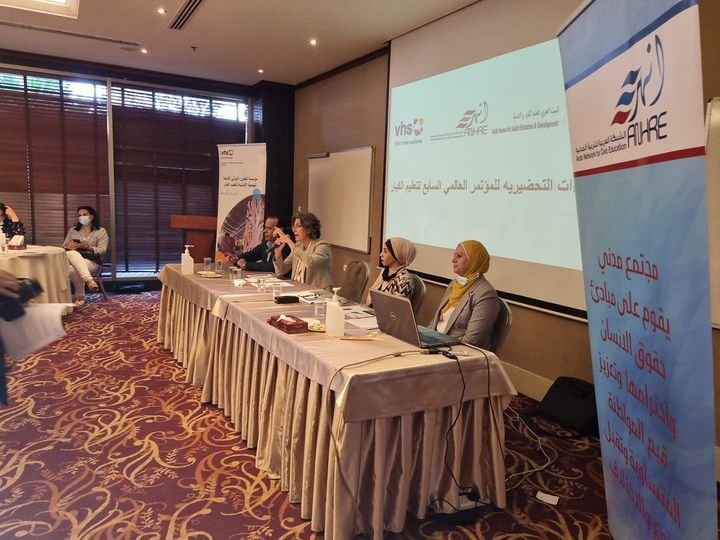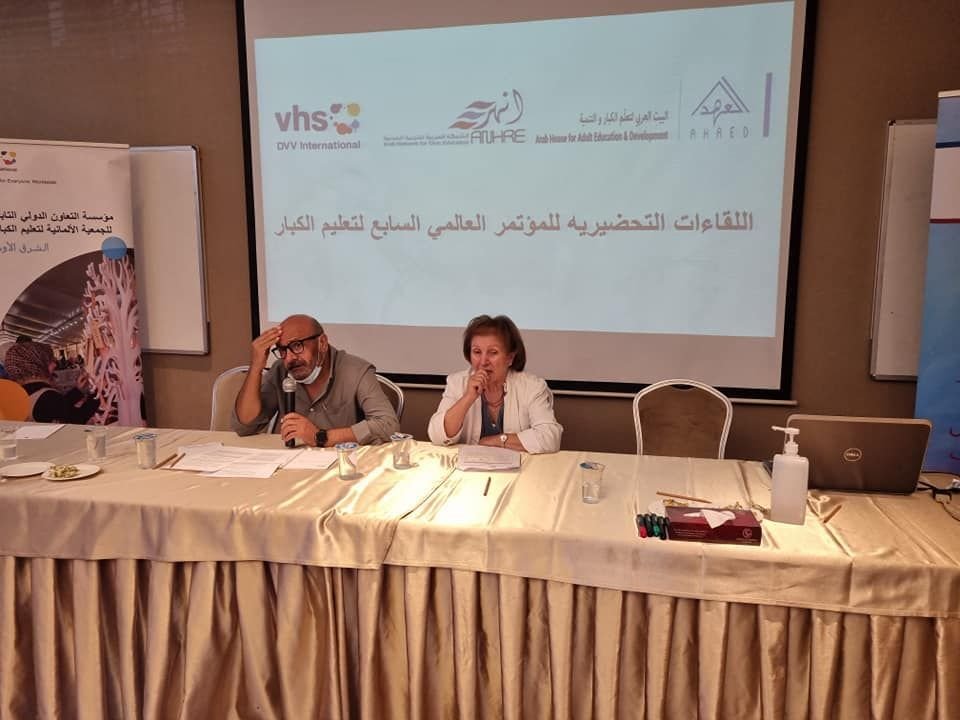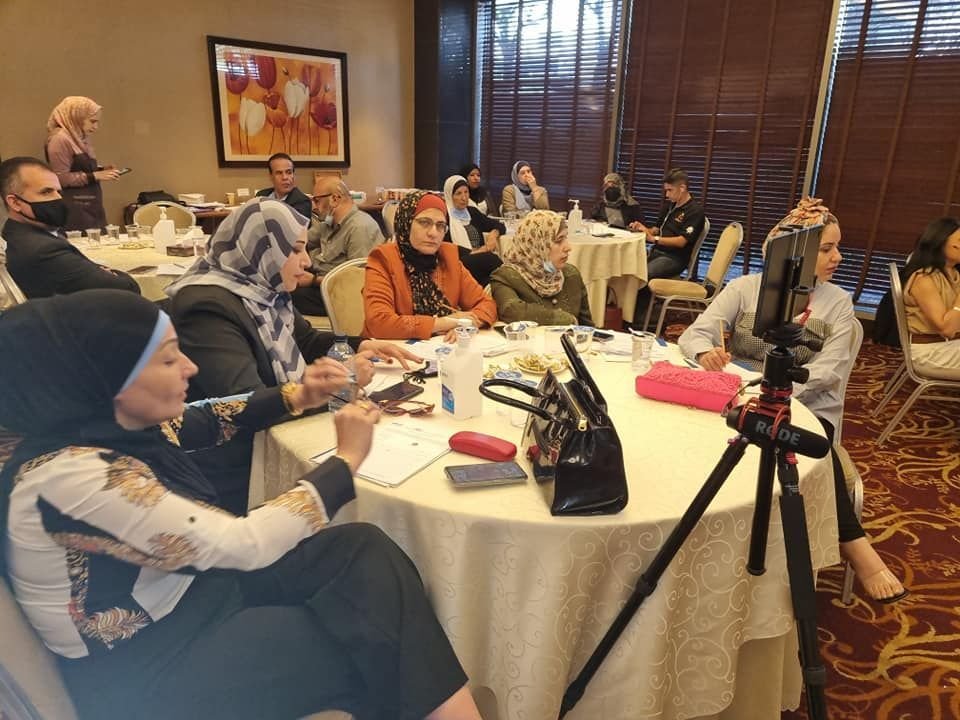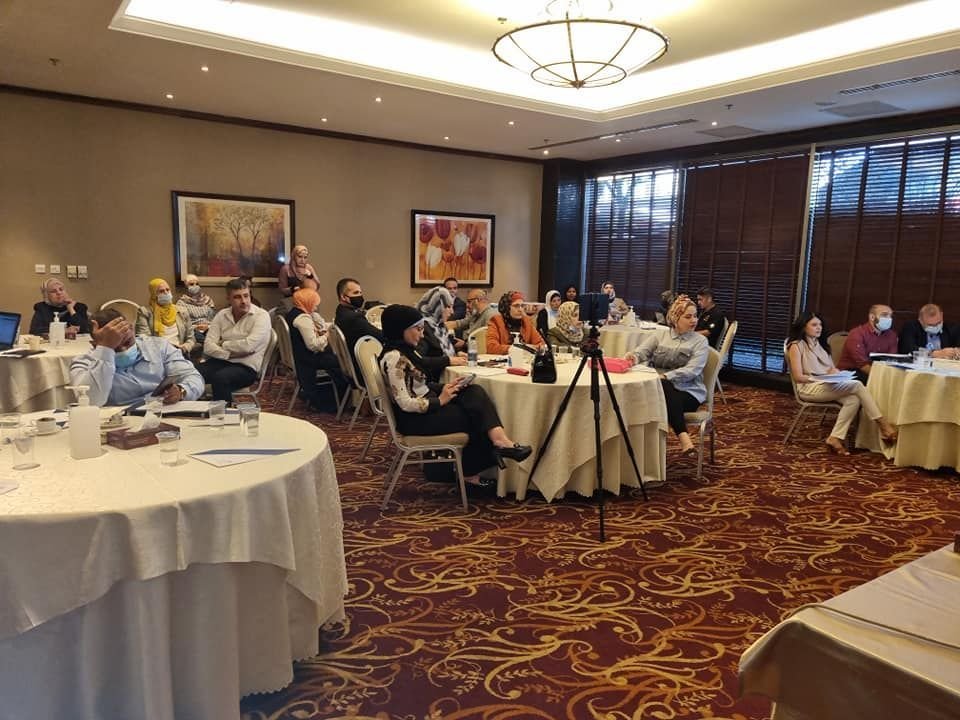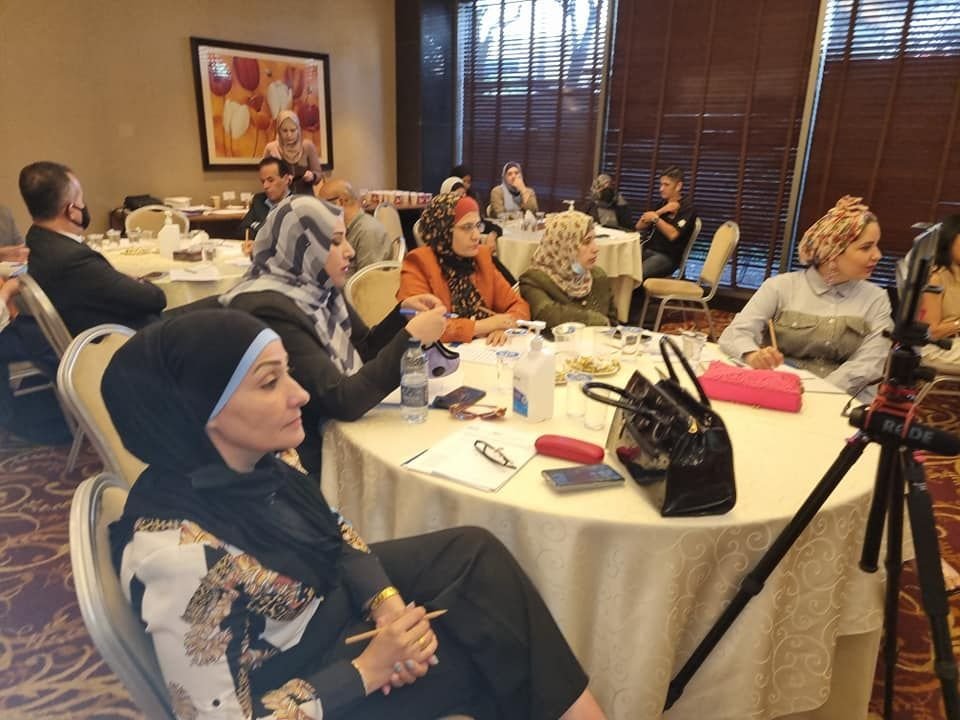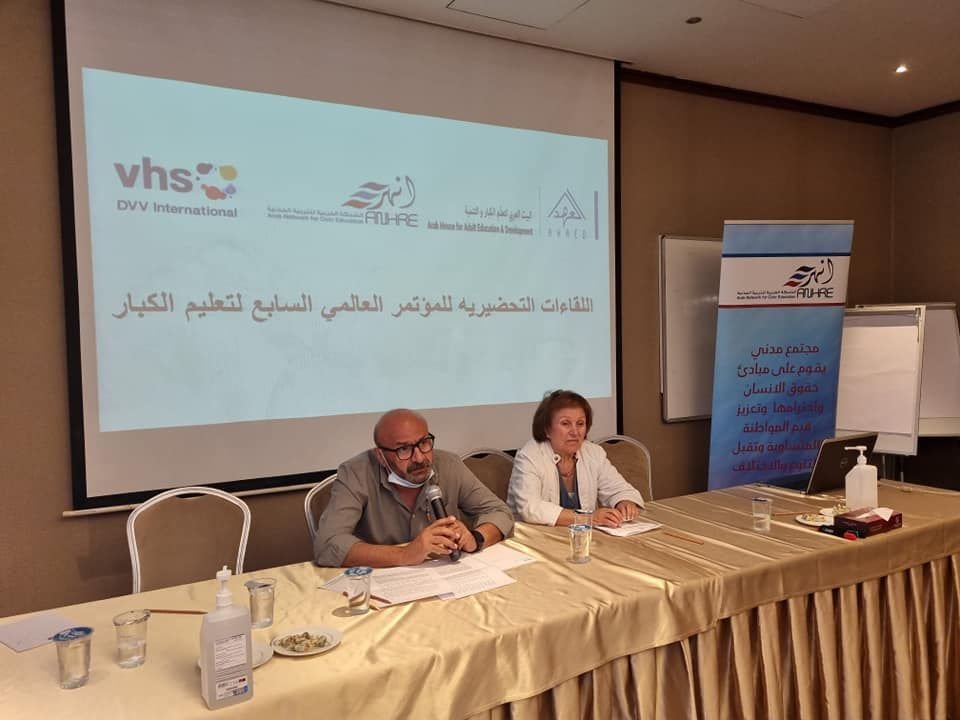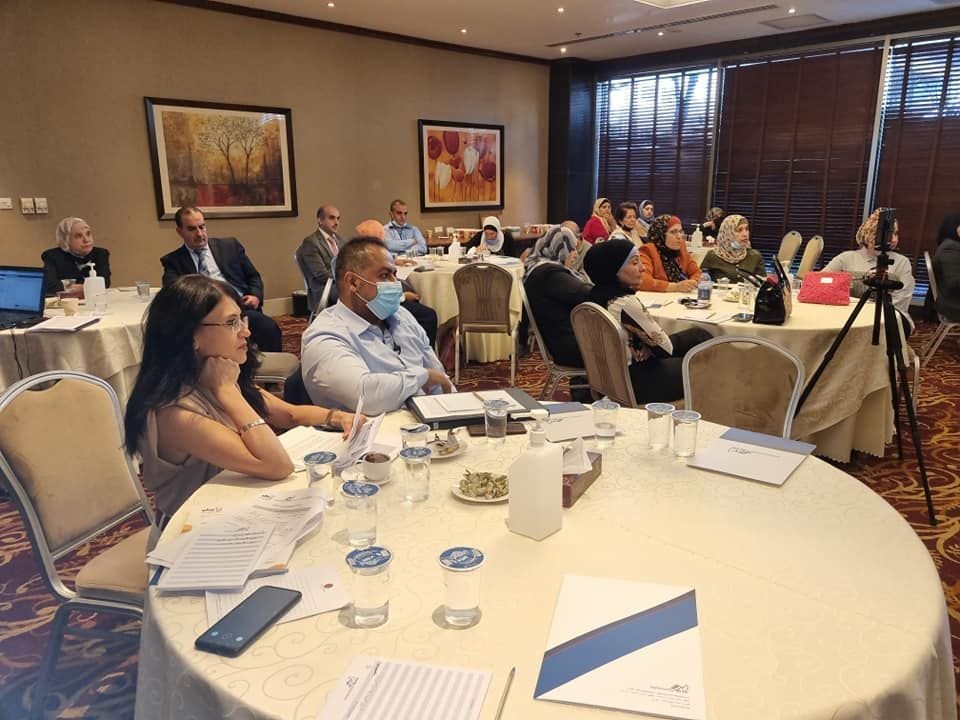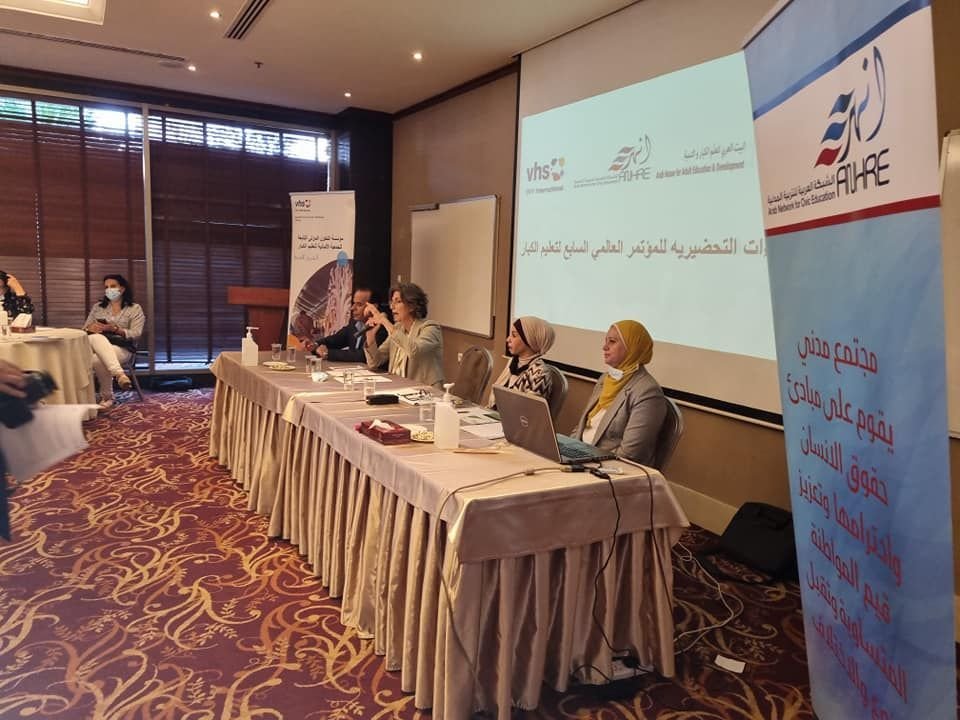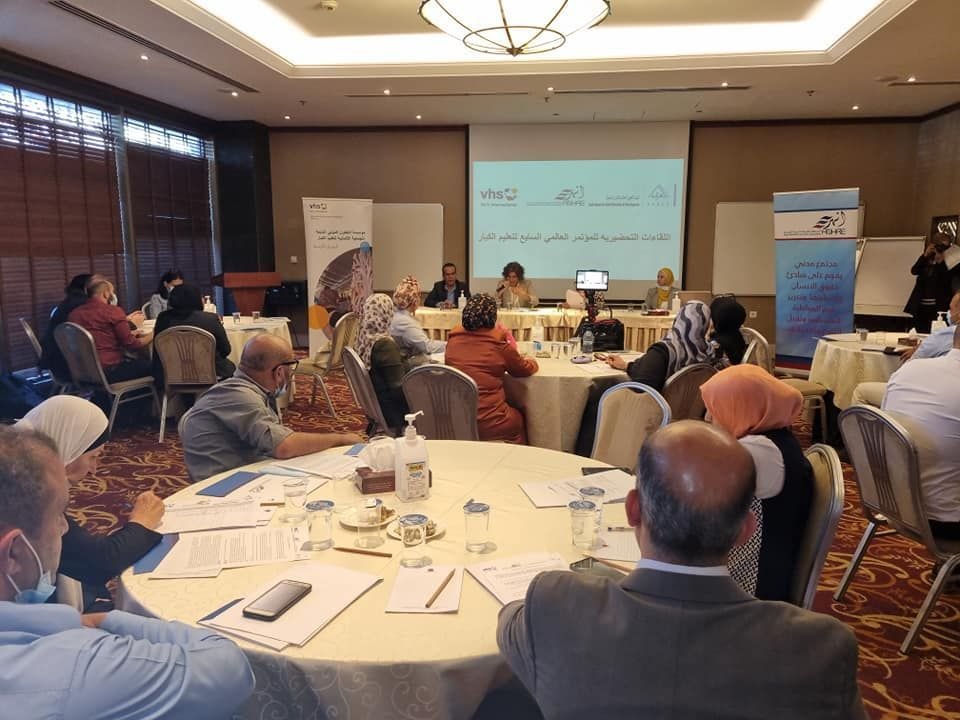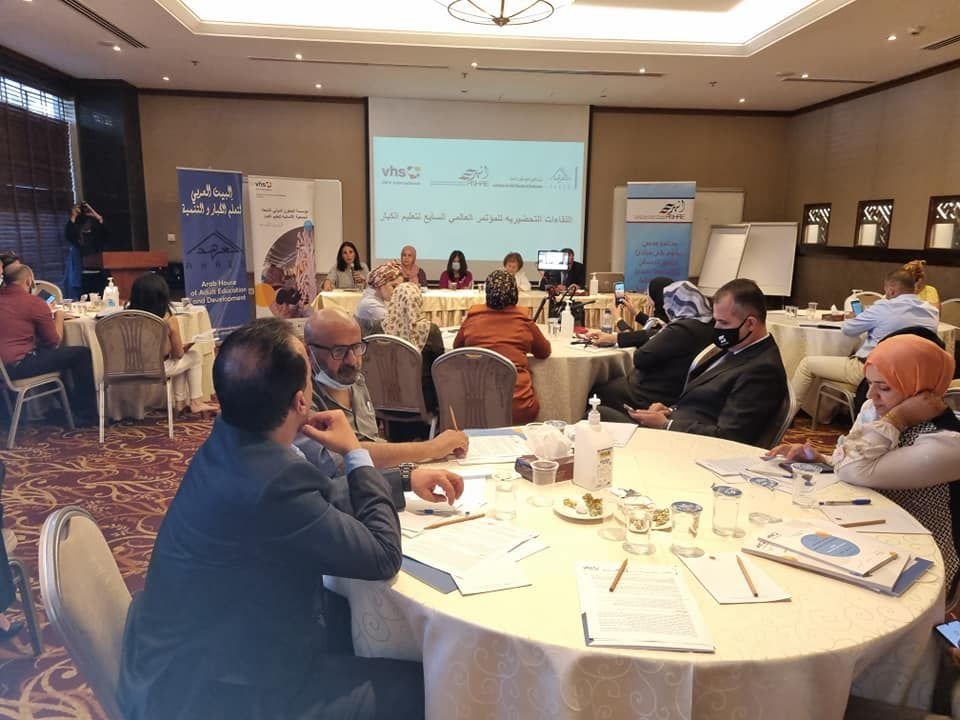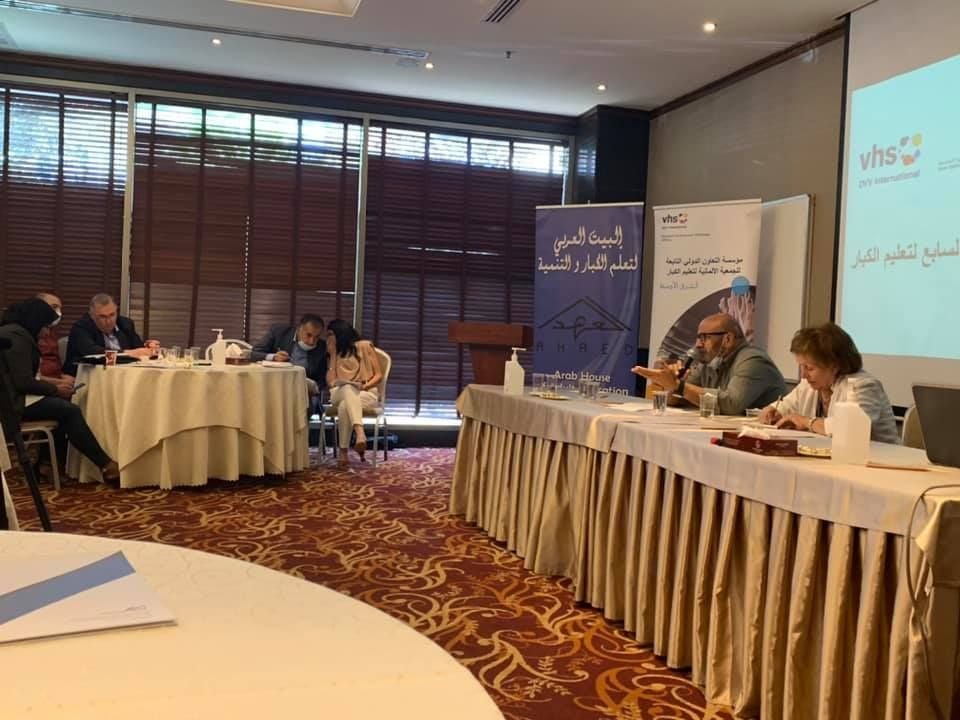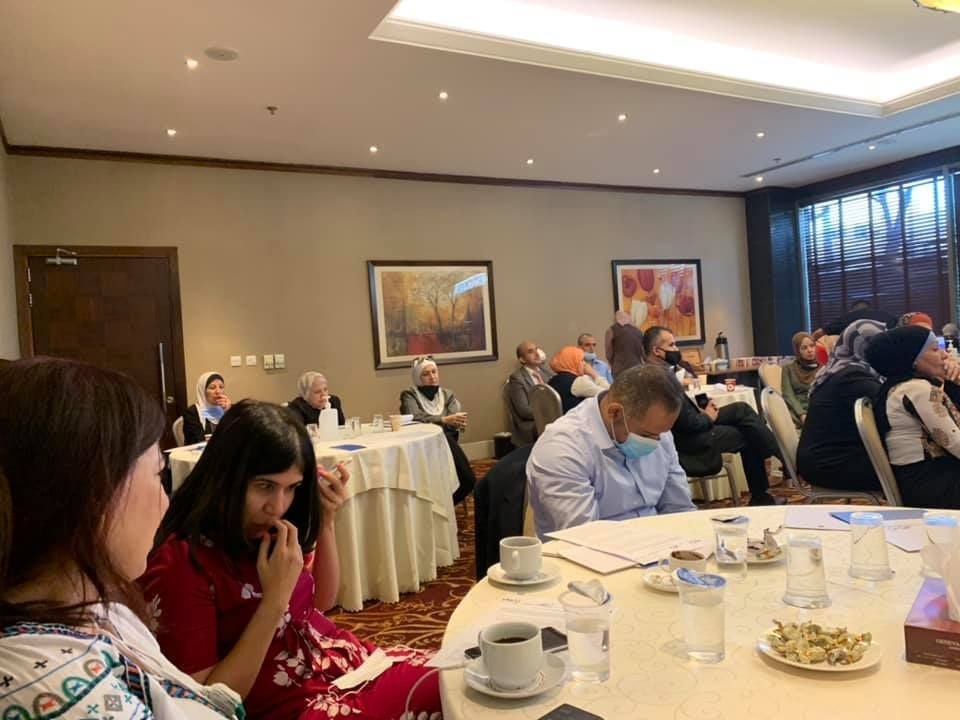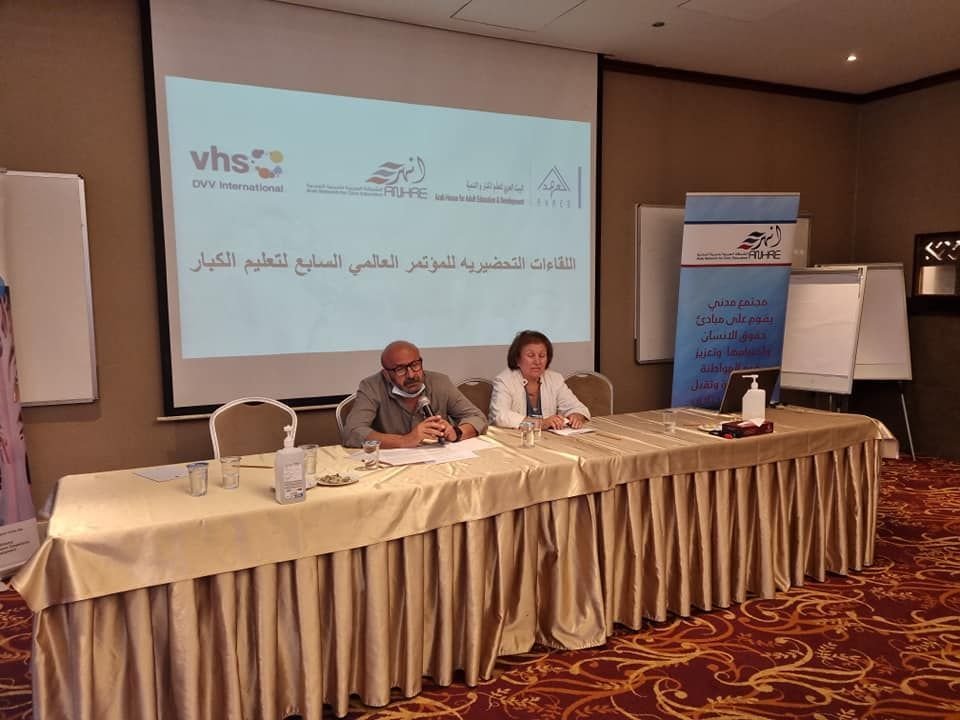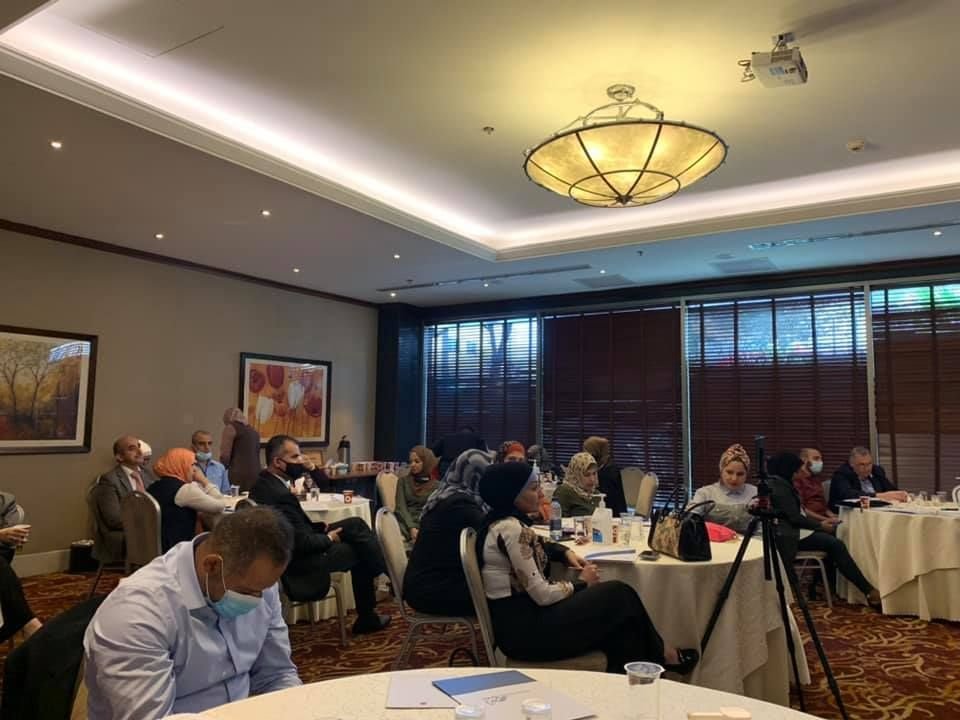
The Arab Network for Civic Education (ANHRE), in cooperation with the Arab House for Adult Education and Development (AHEAD) and DVV International in Jordan, held today a preparatory meeting as part of a series of national preparatory meetings aimed at identifying the key issues and challenges related to adult education in Jordan. The meetings also seek to propose main directions to be included in a unified paper, to be presented within a regional Arab framework outlining the key regional recommendations to be submitted to the Seventh International Conference on Adult Education.
ANHRE Executive Director, Fotouh Younes, stated that this meeting comes as part of the preparations for the Seventh International Conference on Adult Education (CONFINTEA VII), which will be held in Morocco in 2022. She explained that the seventh conference is the first international conference on adult education to be held since the adoption of the Sustainable Development Goals, and that it represents the most important event for the adult learning and education community until 2030.
She noted that the conference will play a key role in shaping effective policies in the field of adult learning and education from the perspective of lifelong learning and within the framework of the Sustainable Development Goals. The conference will also encourage Member States to develop policies, incentives, and institutional tools that help build a culture based on human rights, social justice, shared values, and sustainability. In the age of artificial intelligence, information and communication technologies are receiving special attention due to their role in enhancing access to adult learning and education and promoting its inclusiveness.
Fotouh added that the overall objective is to provide a national perspective on the issues, challenges, and forward-looking strategies related to youth and adult learning and education policies and activities. The meeting also aims to analyze the status of adult learning and education and related trends in Jordan; identify the main drivers of adult learning and education; present methods of providing adult learning and education; highlight examples of good practices, challenges, and lessons learned, particularly in linking adult education to development; and identify future prospects for adult learning and education, including forward-looking strategies and the direction that adult learning and education will take in Jordan.
The meeting also aimed to examine the role of adult learning and education in facilitating the achievement of the Sustainable Development Goals, particularly SDG 4; analyze the impact of the COVID-19 pandemic on adult learning and education in relation to participation, policies, and modes of provision; consider the contribution of adult learning and education to promoting active citizenship, taking national specificities into account; and analyze the uses, potential, risks, and impact of information and communication technologies on adult learning and education.
Younes emphasized that adult learning and education is a fundamental pillar in the advancement and development of human societies. It contributes to implementing development plans and achieving comprehensive progress by preparing, qualifying, and empowering adolescents, youth, and adults; equipping them with knowledge and experience; and enabling them to acquire the basic skills needed to fulfill their roles as active citizens with competence and confidence.
She further noted that this aligns with global efforts to develop a shared understanding of 21st-century skills, their areas of application and investment, and the priorities for action, through the development of a global framework and a strategic roadmap that ensures sustainability in achieving its goals and integrating them into the 2030 Sustainable Development Agenda.
She explained that, based on the global concept of adult education and the understanding that education, in its broadest sense, is a continuous lifelong process that enables individuals to develop their capacities as both individuals and members of society, lifelong education is based on five pillars: learning to know, learning to do, learning to live, learning to be, and learning to live together.
These pillars aim to achieve the integrated development of the individual — personally, socially, cognitively, and emotionally — based on the acquisition of practical life skills and intellectual development within a comprehensive value system. Adult education is therefore increasingly viewed within a broader framework that includes children, youth, and adults who need opportunities to acquire new skills, expand their knowledge, improve employment opportunities, or develop their professional performance to support career growth.
She added that adult learning and education specifically targets adults within their communities in order to improve their technical or professional qualifications, further develop their abilities, or enrich their knowledge for the purpose of completing a level of formal education, acquiring knowledge, skills, and competencies in a new field, or updating their knowledge in a specific area. This also includes what may be referred to as “continuing education,” “recurrent education,” or “second-chance education.”
The meeting included several sessions. The first session, titled “A Look at the Reality of Adult Learning and Education Policies in Jordan,” was facilitated by Taghreed Al-Daghmi. Speakers included Dr. Salma Nims, Secretary-General of the Jordanian National Commission for Women; Khaled Muhareb, Head of the Non-Formal Education Department at the Ministry of Education, General Supervisor of Adult Education and Non-Formal Education Programs, and member of the National Committee for Adult Education; and Ghadeer Al-Haris from the Higher Council for the Rights of Persons with Disabilities. The session addressed policy change, developments in governance systems, changes in funding levels and mechanisms, quality systems, and progress in participation, equity, and inclusion.
The second session was facilitated by Khuzama Al-Rasheed. Speakers included Engineer Ibrahim Al-Tarawneh, Assistant Director-General for Technical Affairs at the Vocational Training Corporation, as well as activists Nadine Nimri, lawyer Inaam Al-Asha, and Rawan Barakat. The session focused on identifying future prospects for adult learning and education, including forward-looking strategies and the direction of adult learning and education in Jordan. It also addressed the role of adult learning and education in facilitating the achievement of the Sustainable Development Goals, particularly SDG 4, and analyzed the impact of the COVID-19 pandemic on adult learning and education in terms of participation, policies, and modes of provision, while presenting successful experiences and a forward-looking perspective.
The closing session featured the Director of the German Adult Education Association, an expert in adult education policies, who spoke about the state of adult learning and education and related trends in Jordan.